
Choosing between plastic impact sprinkler vs metal sprinkler is one of the most consequential equipment decisions in agricultural irrigation. The right choice affects water-use efficiency, maintenance budgets, and how long a system stays in the field without failure.
For decades, metal sprinklers — typically brass, aluminum, or cast iron — were the default. But constant exposure to moisture, fertilizers, and chemically treated water made corrosion a recurring problem. Advances in engineering-grade plastic irrigation sprinklers have changed that equation, and many farms are now switching to polymer-based systems for long-term reliability.
This guide breaks down the real differences between polymer and metal sprinkler heads — and where each one still makes sense.
Quick Comparison: Plastic Impact Sprinkler vs. Metal Sprinkler
| Factor | plastic impact Sprinklers | Metal Sprinklers |
| Corrosion resistance | Excellent — immune to rust and chemical attack | Poor — prone to rust and pitting over time |
| Weight | Lightweight, faster to install | Heavier, more labor-intensive to handle |
| Upfront cost | Lower | Higher |
| Lifecycle cost | Lower (less maintenance) | Higher (parts, repairs, replacement) |
| Electrical safety | Non-conductive | Conductive |
| Impact resistance | Flexible, absorbs shock | Rigid, can crack under impact |
| Best suited for | Most modern field, orchard, and landscape irrigation | Legacy systems, extreme rough-handling environments |
Why plastic impact Sprinklers are Replacing Metal Sprinklers
The shift toward plastic impact irrigation components isn’t a trend — it’s a response to the real operating costs of metal hardware. Metal sprinklers corrode with prolonged exposure to moisture and fertigation chemicals, which drives up maintenance frequency and shortens service life. plastic impact sprinklers, built from advanced engineering polymers, are designed specifically to resist that kind of wear in demanding field conditions.
7 Advantages of Plastic Impact Sprinklers Over Metal Sprinklers
- Lightweight Design for Faster Installation
plastic impact sprinkler heads weigh significantly less than their metal counterparts, which cuts installation time, simplifies handling, and lowers labor costs — especially across large-scale irrigation networks with hundreds or thousands of emitter points.
- Resistance to Corrosion and Chemical Exposure
This is the single biggest reason farms switch. Metal sprinklers corrode when exposed to moisture, fertilizers, and chemically treated irrigation water. Plastic impact sprinklers are inherently resistant to rust, oxidation, and chemical degradation, which means fewer failures and more consistent water delivery over time.
- Longer Service Life and Durability
Because they resist both environmental stress and mechanical wear, plastic impact sprinklers typically last longer in the field. Their structural stability holds up even as field conditions — soil chemistry, water quality, weather — change season to season.
- Lower Maintenance and Lifecycle Costs
Less corrosion and fewer mechanical failures add up to a lower total cost of ownership (TCO). Over a multi-year irrigation cycle, the savings on repairs and replacement parts often outweigh any difference in upfront price.
- Non-Conductive, Safer Around Electrical Systems,
plastic impact sprinklers don’t conduct electricity. That’s a meaningful safety advantage in fields where irrigation lines run near electrical infrastructure or in regions prone to lightning activity.
- Impact Resistance and Flexibility
Engineering polymers flex under mechanical shock instead of cracking. That makes plastic impact sprinkler heads less likely to suffer structural failure from impacts that would damage a rigid metal housing.
- Design Flexibility Across Pressure Ratings and Spray Patterns
Polymer manufacturing supports a wider range of sizes, pressure ratings, and spray patterns than traditional metal casting allows, which is why polymer sprinklers now cover everything from open-field crop irrigation to orchard canopy cooling and landscape applications.
When Metal Sprinklers Still Make Sense
Polymer isn’t the right call in every scenario. Metal sprinklers can still be preferable where:
- Equipment faces routine rough handling or heavy impact (e.g., near livestock or heavy machinery)
- Extremely high flow rates or throw distances are required for large-area coverage
- The system is a legacy installation already built around metal fittings and replacement parts
Vispar plastic impact Sprinklers: Built for Modern Field Conditions
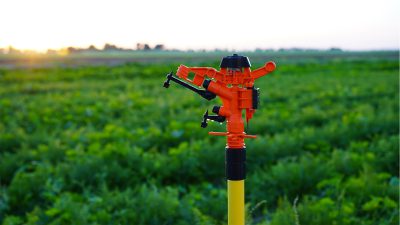
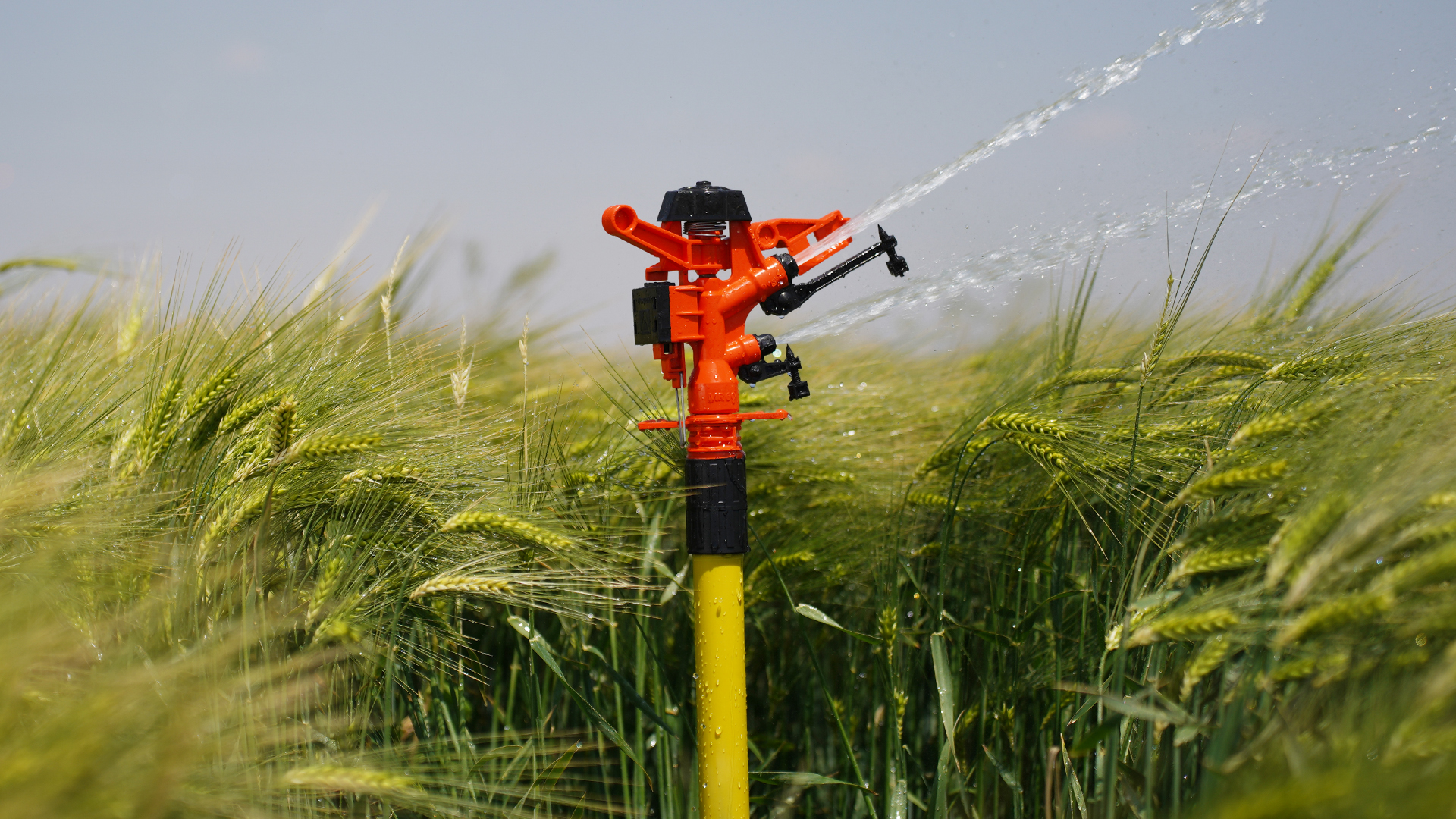
Vispar’s plastic impact sprinkler range is engineered specifically to meet the demands of professional agricultural irrigation — combining corrosion resistance, consistent spray performance, and long-term durability across multiple pressure classes and spray patterns. You can browse Vispar’s polymer sprinkler in our catalogue to find the right model for your field, orchard, or landscape application.
Frequently Asked Questions
- Are plastic impact sprinklers as durable as metal sprinklers? In most field conditions, yes and often more durable over time, since polymer sprinklers don’t suffer from rust or corrosion-driven failure the way metal sprinklers do. Metal can still have an edge in raw impact resistance under extreme rough handling.
- Do plastic impact sprinklers cost less than metal sprinklers long-term? Generally, yes. While upfront prices are often similar or lower for polymer, the bigger savings come from reduced maintenance and replacement costs over the system’s lifespan.
- Can polymer sprinklers handle high operating pressures?
Modern engineering polymers are manufactured across a wide range of pressure ratings, making them suitable for both low-pressure landscape systems and higher-pressure agricultural applications.
Are plastic impact sprinklers suitable for large-scale commercial farms?
Yes. Polymer sprinklers are now widely used across large-scale agricultural operations, thanks to their consistent performance, lower installation labor, and reduced long-term maintenance — making them well-suited to scaling across large fields and orchard blocks.
Conclusion
For most modern irrigation systems, polymer sprinklers outperform metal sprinklers on the metrics that matter most over time: corrosion resistance, maintenance costs, installation speed, and safety. Metal retains an edge only in narrow, high-impact use cases. As agriculture continues shifting toward precision irrigation and sustainable water management, polymer sprinkler technology — like the systems engineered by Vispar — is positioned to become the standard rather than the alternative.